Category: Neurociência

  • Social Anxiety: Why Your Brain Treats a Crowded Room as Real Danger

    Social Anxiety: Why Your Brain Treats a Crowded Room as Real Danger

    You walk into a room full of people you barely know and your heart speeds up, your throat tightens, your body gets ready to run — exactly as if you were facing real physical danger. You are not in danger. But there is a very concrete evolutionary reason your brain doesn’t know the difference.

    Social rejection lights up the same networks as physical pain

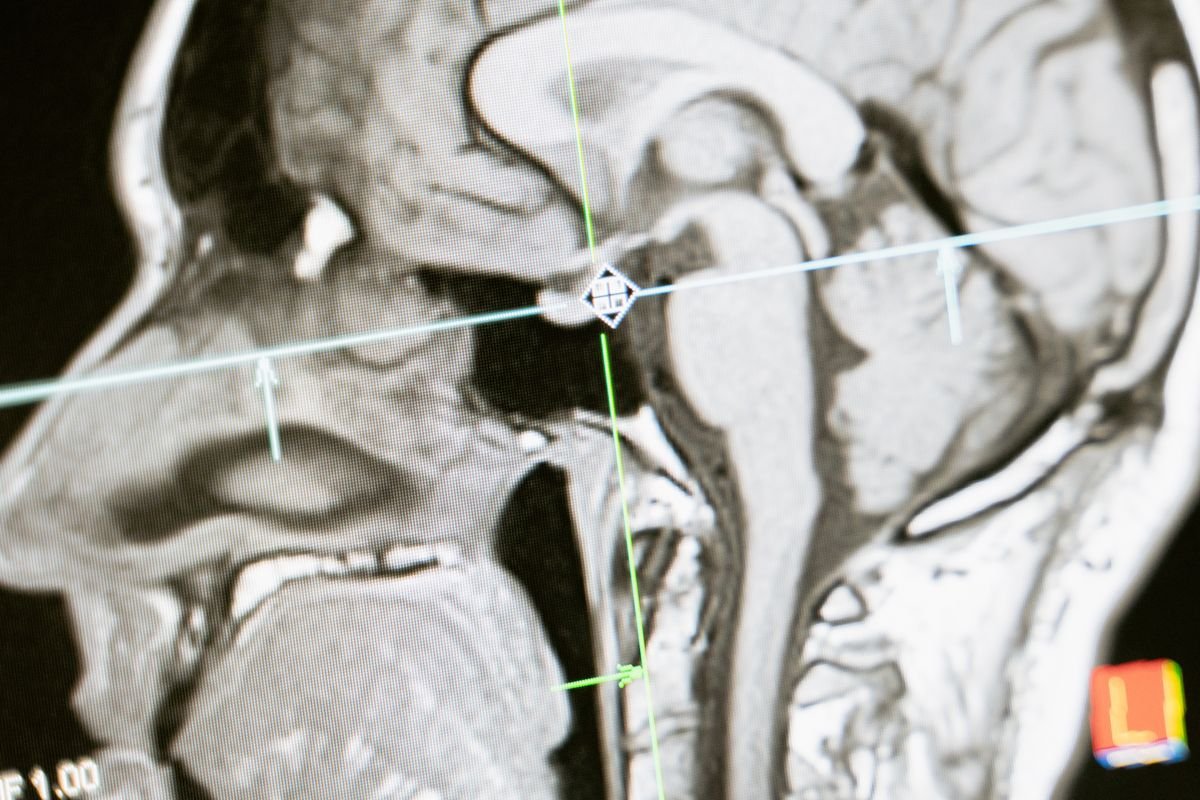
    In 2003, neuroscientist Naomi Eisenberger and psychologist Matthew Lieberman put volunteers in an MRI scanner to play a simple game of tossing a virtual ball, until the other players excluded them — the other players being, in fact, a program. The result: being excluded activated the dorsal anterior cingulate cortex, the same region that processes physical pain. To the brain, social exclusion isn’t a metaphor for “hurting” — it is processed, in part, as pain for real.

    Why this made sense 200,000 years ago

    For most of the history of the species, being excluded from the group wasn’t a passing discomfort — it was a death sentence. No tribe, no protection, no shared resources; surviving alone was close to impossible. The brain that today fires anxiety in front of a room full of strangers inherited a social threat detection system calibrated for a world where that threat was literally existential. A stranger’s judgment does not decide whether you survive — but the amygdala still reacts as if it did.

    From the neuroscience to the protocol

    If the social alarm is real but out of proportion to today’s real threat, the answer isn’t to talk yourself into “not being afraid” — the amygdala doesn’t respond to logical arguments. It responds to repeated, safe experience of the trigger itself, until the brain updates its threat map. That is the logic of the Fear Protocol applied to a social context: identify the exact social situation that sets off the alarm, and design gradual exposure until the system learns that a room full of people is not, in fact, danger.

    Keep exploring how the amygdala hijacks your decisions, or why the need for approval uses the same social threat circuit.


    Want to apply this in a structured way? The Fear Protocol (PDF, $9) walks you through it step by step: naming the exact social trigger, mapping your body’s reaction, and designing the gradual exposure that switches the alarm off.


  • Self-Sabotage: Why You Wreck What You Want Most Just as You Get Close

    Self-Sabotage: Why You Wreck What You Want Most Just as You Get Close

    You are closer to the goal than you have ever been — the diet working, the deal about to close, the relationship finally steady — and that is exactly when you turn up late, pick a fight over nothing, or drop the habit that got you there. It isn’t a lack of willpower. It’s your brain pulling you back into territory it already knows.

    The psychological thermostat nobody told you that you had

    In 1960, plastic surgeon Maxwell Maltz noticed something strange in his patients: even after surgery that objectively changed their appearance, many went on behaving, and feeling, exactly as before. He described the phenomenon as an internal thermostat: the brain holds an image of who you think you are, and any change in behavior that moves away from that image too fast is treated as a deviation to be corrected, not as progress to be celebrated.

    Why success can set off the same alarm as danger

    This explains self-sabotage better than “laziness” or “lack of discipline”: if your internal self-image is “I’m someone who can’t keep this up”, getting close to the goal creates a dissonance between who you think you are and who you are becoming. The brain, which prioritizes consistency over comfort, resolves that tension the fastest way available — not by changing the belief, but by braking the behavior that contradicts it. You skip the workout, you put off the proposal, you start the argument. The thermostat has brought the temperature back down.

    From the neuroscience to the protocol

    If the obstacle isn’t the goal itself but the distance between it and your self-image, lasting change means closing that distance before trying to cover it in one go — not with more willpower, which is precisely the resource this mechanism burns through first. That is the logic of the Head vs. Arena Protocol: stepping out of the loop of analysis and justification that keeps everything inside your head, and designing a minimum action big enough to update, step by step, the picture your brain holds of you.

    Keep exploring how procrastination is another form of the same avoidance mechanism, or how the fear of change fires the same alarm circuit.


    Want to apply this in a structured way? The Head vs. Arena Protocol (PDF, $9) walks you through it step by step: getting out of the mental analysis loop, and designing the minimum action that updates your self-image without tripping the thermostat.

  • Impostor Syndrome: Why Your Brain Ignores the Evidence of Your Own Success

    Impostor Syndrome: Why Your Brain Ignores the Evidence of Your Own Success

    You get a compliment at work and your first reaction isn’t relief — it’s discomfort. “I got lucky.” “They haven’t noticed yet.” “Next time they’ll find out.” The same brain that memorized every mistake of the last five years seems incapable of holding on to a single piece of evidence of competence. This isn’t random self-doubt — it’s a processing pattern with a name and a very specific mechanism.

    Impostor syndrome has almost 50 years of history

    In 1978, psychologists Pauline Clance and Suzanne Imes described a pattern in academically and professionally successful women: despite objective qualifications, they felt fraudulent and put their results down to luck, timing or charm — never to their own competence. They called it the “impostor phenomenon”. Half a century later, we know it is exclusive neither to women nor to any profession — it is a pattern of information processing that any brain can learn.

    Why the brain keeps failure and discards success

    The reason isn’t a lack of evidence — it’s how memory treats it. The amygdala tags emotionally intense experiences, especially threatening ones such as a public mistake, with a kind of priority label that makes them easier to retrieve later. A quiet success doesn’t fire that mechanism the same way — it slips by unlabeled, and so it is harder to recall when you need evidence in your own favor. The result is a biased memory archive: not because you failed more than you succeeded, but because the brain filed the two completely differently.

    Your identity filters what you accept as proof

    There is a second mechanism working against you: the brain’s tendency to look for information that confirms what it already believes about you, even when that belief is uncomfortable. If your internal self-concept is “I’m not good enough”, a compliment conflicts with that model and gets reinterpreted — “it was luck” — until it stops threatening internal coherence. This isn’t vanity or false modesty: it’s the brain protecting a model of you it has already built, even when that model is wrong.

    From the neuroscience to the protocol

    If the problem isn’t a lack of evidence but the filter deciding which evidence counts, lasting change means working on that filter deliberately — not by piling up more successes, which will be discarded the same way, but by teaching the brain to process them differently. That is the logic of the Belief Filter Protocol: identifying the exact belief that is filtering your evidence, and systematically replacing the criterion that decides what counts as proof.

    Keep exploring how chronic guilt uses the same circuit to keep you tied to the past, or how perfectionism is another form of the same fear of being seen as not enough.


    Want to apply this in a structured way? The Belief Filter Protocol (PDF, $9) walks you through it step by step: identifying the exact belief filtering your evidence, mapping where it fires, and training a new criterion for what counts as proof.

  • Neuroplasticity: How Your Brain Rewrites Limiting Beliefs

    Neuroplasticity: How Your Brain Rewrites Limiting Beliefs

    You think a limiting belief is just a matter of attitude — that “thinking positive” is enough to make it go away. It isn’t quite like that. A belief repeated for years doesn’t live in your head as a loose idea: it lives in your brain as a physical circuit, reinforced by every time you thought, felt or acted in line with it. Neuroscience has good news and bad news. The bad first: positive thinking, on its own, doesn’t change the circuit. The good: the circuit can be rewritten, but the process is more specific than most personal development content admits.

    What neuroplasticity is

    Neuroplasticity is the brain’s capacity to change its own structure in response to experience. It isn’t a metaphor — it’s a physical, measurable process. Every time you repeat a thought, an emotion or an action, a specific set of neurons fires together. Neuroscientist Donald Hebb summed this up in a phrase that became a basic law of neuroscience: “neurons that fire together, wire together”. Each repetition strengthens the synaptic connection between those neurons — the signal travels faster, with less effort, ever more automatically.

    That’s how a habit forms, or a phobia, or an addiction — and a limiting belief too. “I can’t do it”, “I don’t deserve it”, “this never works out for me” start as an isolated thought, usually tied to an emotionally intense experience. But every time the situation repeats and you react the same way, the circuit gets stronger and faster to fire. After a few years it stops feeling like a thought — it feels like a fact about who you are.

    How a belief turns into an automatic circuit

    This process has a technical name: long-term potentiation (LTP). It’s the mechanism by which repeatedly used synapses become more efficient at transmitting signal. At the same time, the connections you don’t use weaken and can disappear — a process called synaptic pruning. The brain literally invests resources in the paths you use most and lets the unused ones die off.

    That’s why an old belief is so hard to change with willpower alone: you aren’t competing against an abstract idea, you’re competing against a circuit with years of reinforcement and energetic priority. It’s also why a new belief, practised inconsistently, rarely gains ground — it hasn’t had enough repetition to compete with the old circuit.

    The reconsolidation window: why repeating a phrase isn’t enough

    Here is the part most mindset content ignores. When you retrieve a memory or a belief — when the trigger situation happens again and the old thought surfaces — that circuit isn’t merely “playing”; it enters a temporarily unstable state called reconsolidation. For a window of a few hours it can be updated, weakened or replaced. But only if, at that exact moment, something happens that contradicts the brain’s original prediction — what researchers call prediction error.

    In other words: it isn’t enough to affirm “I can do it” sitting alone at home, disconnected from the real trigger. The old belief has to be activated by the trigger — and, in that instant, an experience (an action, a result, an emotion) has to happen that clearly contradicts what the belief predicted. It is that lived contradiction, not the repetition of a phrase, that opens the door to rewriting the circuit.

    From the neuroscience to the protocol

    This is exactly the logic behind the Reality Anchoring Protocol and the Belief Filter Protocol: first you identify the exact trigger that fires the pattern (not a generic version — the specific situation), then you name the belief and the emotion it sets off, and only then do you design a different action to carry out at exactly that trigger moment. It isn’t about repeating a nice affirmation in the morning. It’s about deliberately entering the reconsolidation window — real trigger, new action, result that contradicts the old belief — and repeating that enough times for the new circuit to win the race against the old one.

    You don’t need to erase the old belief overnight. You need to build enough repetition in favor of the new pattern that, over time, it becomes the path the brain takes by default. If you want to apply this in a structured way, the Reality Anchoring Protocol and the Belief Filter Protocol walk you through the process step by step — from identifying the trigger to installing the new anchor.

    This is the same mechanism behind how to eliminate limiting beliefs in practice, and it also explains why fear is not the enemy once you know how to switch off the right alarm.


    Want to apply this in a structured way? The Belief Filter Protocol (PDF, $9) walks you through it step by step: catching the belief in action, listing what it makes you ignore, and writing the version that starts filtering in your favor.

  • Dopamine and the Habit Loop: The Neuroscience of Emotional Dependency

    Dopamine and the Habit Loop: The Neuroscience of Emotional Dependency

    Calling it “a lack of willpower” is comfortable, but inaccurate. Emotional dependency — staying attached to a person, a relationship or a pattern that already hurts you — has a very specific neurochemical signature, and that signature explains why “just deciding to stop” rarely works on its own.

    Dopamine is not the pleasure chemical

    For decades, dopamine was popularly described as “the pleasure molecule”. More recent research, especially Kent Berridge’s work on the brain’s “wanting” and “liking” systems, shows a different picture: dopamine is tied not to pleasure itself but to desire — to the anticipation of a reward. It’s the system that says “go after this again”, not the system that says “that was good”.

    This explains the central paradox of emotional dependency: you keep seeking someone’s attention, checking your phone, going back to the same person, even when the actual experience no longer gives you the pleasure it used to. The “wanting” system is active even after the “liking” system has gone quiet.

    Prediction error and intermittent reward

    Neuroscientist Wolfram Schultz found that dopamine neurons don’t simply fire at a reward — they fire at a reward better than expected, or at a cue that predicts that reward. This is what is called reward prediction error.

    This finding explains why the most unpredictable relationships — the ones with inconsistent attention, advances and retreats, hot and cold — are so often the hardest to leave. When the reward is intermittent and unpredictable (an affectionate message after days of silence, say), the dopamine system fires harder than it does at a predictable, constant reward. It’s the same principle that makes slot machines so addictive: it isn’t the reward itself, it’s the uncertainty about when it will arrive.

    The habit loop: trigger, routine, reward

    Emotional dependency doesn’t live only in the chemistry — it also lives in the habit structure automated by the basal ganglia, the brain region responsible for making repeated behaviors ever more automatic and less conscious. Every habit follows the same basic loop: a trigger (feeling lonely, anxious, bored), a routine (contacting the person, checking their profile, looking for validation), and a reward (momentary relief, attention, a hit of dopamine).

    With enough repetition, this loop stops needing a conscious decision — it fires by itself at the trigger, often before you have time to notice you are doing it again.

    Why willpower alone fails

    Trying to stop by merely “resisting” the routine, without changing the trigger or designing an alternative routine, is an unequal fight: you are spending the prefrontal cortex’s limited self-control against an automated circuit that needs no conscious effort to fire. That’s why relapse is so common even after “firm decisions”.

    What actually works, according to research on habit change, is keeping the trigger (sometimes you can’t remove it) but replacing the routine — deliberately designing an alternative action that still delivers some relief to the reward system, without returning you to the old loop.

    From the neuroscience to the protocol

    This is the structure the Emotional Dependency Protocol works on: identifying the exact trigger (not “I feel bad”, but the specific situation that fires the seeking), naming the automatic routine that follows, and consciously designing a new routine that breaks the loop without leaving you in total deprivation — because trying to remove the reward outright, with no substitute, is usually unsustainable.

    Understanding that this is a dopamine and habit circuit, not a character flaw, changes how you work at change: it stops being about “having more willpower” and becomes about deliberately designing a new trigger-routine-reward loop until it gains ground on the old one. The Emotional Dependency Protocol walks you through that process, step by step.

    The same dopamine circuit explains why checking your phone without stopping hooks you so fast, and why overthinking before acting is also a way of avoiding the discomfort.


    Want to apply this in a structured way? The Emotional Dependency Protocol (PDF, $9) walks you through it step by step: identifying who your mood depends on each day, mapping the unpredictable reward loop that holds you, and giving you back the decision about how you feel.

  • The Fearful Brain: Why the Amygdala Hijacks Your Decisions

    The Fearful Brain: Why the Amygdala Hijacks Your Decisions

    A fire alarm that goes off from shower steam isn’t protecting anyone any more — it’s just making noise. The same goes for when your fear fires at a situation that no longer represents real danger: sending a message, asking for a raise, ending a relationship that no longer makes sense. The brain doesn’t know the difference between a lion and a social rejection — and there is a very concrete neurological reason for that.

    The fast route and the slow route of fear

    Neuroscientist Joseph LeDoux described two pathways by which information about a threat reaches the brain. The first — the fast route — runs from the thalamus straight to the amygdala, the structure responsible for detecting threats and firing the fight, flight or freeze response. This path is fast but crude: it reacts to general patterns (a sudden movement, a tone of voice, an angry face) before you consciously know what is going on.

    The second pathway — the slow one — goes through the thalamus, then the cortex, where the information is analysed with more detail and context, and only then reaches the amygdala. This route is slower but more accurate: this is where you realize that “lion” was only a shadow. The problem is that, in a moment of perceived threat, the fast route always wins the race. The amygdala has already fired the emergency response — racing heart, short breath, tunnel attention — before the prefrontal cortex has had time to assess whether the threat is real or merely looks like one.

    Why fear generalizes

    This also explains why a specific fear spreads to wider and wider situations. In classic fear conditioning experiments, a neutral stimulus paired just once with a painful experience is enough for the brain to start treating it as dangerous — and that association tends to generalize to similar stimuli. A painful rejection at 16 can train the amygdala to fire not only at that specific person, but at any situation that resembles it, however remotely.

    That’s why the “worst case” you imagine is rarely proportional to the real risk of today’s situation — it’s proportional to the intensity of the original experience that taught the fear.

    Extinction: how the brain unlearns a false alarm

    The good news is that this response can be retrained — but not by the route most people try first, which is avoiding the situation. Avoiding the trigger actually teaches the brain the opposite of what you want: it confirms that the situation really was dangerous (because you only felt “safe” once you had escaped it).

    The mechanism that actually switches off a learned fear is called extinction. It consists of exposing yourself to the trigger in a safe context, repeatedly, until the prefrontal cortex — the ventromedial region specifically — learns to actively inhibit the amygdala’s response. Extinction doesn’t erase the original fear memory (which is why fear can return under stress); it creates a new, stronger memory telling the brain that the situation is, after all, safe. It’s a race of repetition between two circuits — the one that already existed and the one you are building.

    From the neuroscience to the protocol

    This is the logic behind the Fear Protocol: naming the exact situation (not the generic fear, but the concrete trigger), identifying the body’s automatic reaction, and — the decisive step — designing gradual, repeated exposure to that specific situation, in conditions where you can stay present long enough for the prefrontal cortex to do its work. Every time you go into the trigger and come out of it without the disaster the amygdala predicted, the new safety memory gets a little stronger.

    If this process has such a concrete basis in how the brain learns and unlearns threats, it makes sense to work at it in a structured way — not waiting for the fear to disappear on its own, but deliberately teaching your brain that the alarm no longer needs to ring. The Fear Protocol walks you through that process, trigger by trigger.

    Keep on to exploring how to switch off those false alarms, or why chronic guilt uses the same circuit to keep you tied to the past.


    Want to apply this in a structured way? The Fear Protocol (PDF, $9) walks you through it step by step: naming the exact trigger, mapping the body’s reaction, and designing the gradual exposure that switches the alarm off.

  • Chronic Guilt: Why the Brain Keeps Punishing You for Something Already Repaired

    Chronic Guilt: Why the Brain Keeps Punishing You for Something Already Repaired

    You have apologized, you have fixed what you could, months or years have gone by — and you still replay the same scene, with the same weight? If the answer is yes, the problem is no longer the guilt itself. It has become the brain’s habit of carrying it.

    Guilt is an alarm, it isn’t supposed to be permanent

    Processing guilt involves regions such as the anterior cingulate cortex and the insula — circuits tied to social error detection. Functionally, guilt should work as a brief alarm: it points at a repair action and then switches off. When the alarm keeps ringing after you have already done everything you could, it stops being a signal and becomes rumination — the same kind of repetitive thought loop associated, in excess, with anxiety and depression.

    Not all guilt is legitimate — the test you have probably never run

    One question separates legitimate guilt from unnecessary self-punishment: if a friend had done exactly the same thing, in the same situation, would you demand of them the same level of guilt you demand of yourself? Most people answer that they would be more understanding with the friend — which shows that part of the weight they carry doesn’t come from a genuine value of their own, but from a rule or expectation imported from someone else. Research on self-compassion consistently shows that treating yourself by the same standard you would apply to a friend lowers the cortisol response to a mistake — while harsh self-criticism keeps it high.

    Repair or release: there are only two roads, never a third

    1. If a concrete repair action is still missing — define exactly what it is, and by when you will do it.
    2. If you have already done everything within your reach — write a factual closing sentence, not an excuse: “I did what I knew how to do with what I had at the time; going on paying for it today undoes nothing.”
    3. Next time the guilt comes back with no new action to take, replace replaying the scene with a concrete behavior: rereading the closing sentence, switching activity, or simply noticing that the alarm fired with no new reason.

    The third road — replaying without acting and without releasing — is the only one that doesn’t functionally exist in a healthy brain, but it is the one most people choose out of habit, just as happens with other automatic anxiety cycles.

    Find out whether your guilt is asking for repair or only for release — with a guided process.

    Chronic guilt fires the same circuit as the fearful brain, and the way out runs through learning to switch off the brain’s false alarms.


    Want to apply this in a structured way? The Working Through Guilt Protocol (PDF, $9) walks you through it step by step: separating the guilt that still asks for an action from the guilt that should have been released long ago, making the repair when there is one, and closing the matter when there isn’t.

  • Analysis Paralysis: What Happens in the Brain When You Overthink Before Acting

    Analysis Paralysis: What Happens in the Brain When You Overthink Before Acting

    How long have you been “thinking through” that decision — starting the conversation, launching the project, booking the appointment — without having done it even once? Analysing looks like prudence. In practice it’s a sophisticated way of not acting, and neuroscience explains why that analysis never gets to feel “enough”.

    Simulating the risk in your head fires almost the same threat response as living it

    Brain imaging studies show that mentally simulating a negative scenario fires threat circuits — amygdala included — very much as the real situation does. This means that every time you replay the worst case in your head, your nervous system reacts as if the risk were happening again, without ever receiving the information only real action would bring: that most of the time, the catastrophic scenario simply doesn’t happen.

    Only action produces the “prediction error” the brain needs in order to learn

    Brain learning depends on what neuroscience calls prediction error: the difference between what you expected to happen and what actually happened. Without that difference there is no belief update — only repetition of the original fear. Thinking about the same decision one more time generates no new data; it only reinforces the simulation. People who act and adjust along the way accumulate more real prediction error — and therefore more learning — than those who only plan indefinitely.

    3 steps to get out of your head and into the arena

    1. Define the minimum action that fits into this week. Not the complete, perfect version — the smallest executable slice of the decision.
    2. Test whether the worst case has actually ever happened. To you, or to someone you know who tried something similar? If the answer is “I don’t know” or “no”, it’s simulation, not prediction.
    3. Act and record what actually happened, compared with what you imagined. It is that contrast — not more analysis — that reprograms the automatic threat response for next time.

    The same simulation pattern underpins much of the limiting beliefs and the fear that stops you before you act: intelligence without action becomes a prison; action without perfection still builds.

    You have analysed enough. It’s time to step into the arena, with a guide.

    This paralysis usually goes together with lack of focus and anxiety, and underneath it uses the same reward mechanism as dopamine and habit.


    Want to apply this in a structured way? The Head vs. Arena Protocol (PDF, $9) walks you through it step by step: putting a time limit on the analysis, writing down the ten-minute action that settles what you’ve been thinking about for weeks, and doing it before you go back to thinking.

  • Why Checking Your Phone Non-Stop Fires the Same Circuit as Addiction

    Why Checking Your Phone Non-Stop Fires the Same Circuit as Addiction

    Have you lost count of how many times a day you check your phone waiting for a reply, look at your bank balance or refresh a metric you already know hasn’t changed? Checking too much doesn’t change the outcome — but it moves you out of the builder’s seat and into the beggar’s, and neuroscience explains exactly why.

    Variable reward: the same mechanism as slot machines

    The dopamine system doesn’t fire hardest when you get a certain reward — it fires hardest when the reward is uncertain. A reply that “might or might not” arrive fires the same expectation circuit a slot machine was designed to exploit. Every time you check and the reply isn’t there, the brain doesn’t give up — it strengthens the expectation that next time it might be. Uncertainty is the fuel, not a problem to be solved by checking more.

    Every check without an answer feeds the anxiety instead of easing it

    Checking gives a moment of relief — and it is exactly that brief relief which teaches the brain that checking is the action that brings safety. This is a negative reinforcement loop well documented in compulsive behaviors: the short-term relief consolidates the checking habit, while the underlying anxiety doesn’t drop — it comes back, usually stronger, until the next check.

    How to break the loop: tolerate the uncertainty instead of resolving it

    1. Name what you check and how often. Without concrete numbers the pattern stays invisible and looks “normal”.
    2. Confirm whether checking changes the final outcome. In most cases the action is already done — checking changes nothing, it only brings the information forward.
    3. Build in a deliberate, growing delay before you check. Start with 10 minutes, then 30, then an hour — the same principle of gradual exposure used to switch off false fear alarms: it is tolerance of uncertainty, trained little by little, that switches the loop off — not one single act of “willpower”.

    Planting a seed and digging it up every day to see whether it has grown speeds up nothing — it only delays, because the root never gets to take hold.

    Learn to let go of control without losing the progress you’ve already made.

    This checking habit runs on the same circuit of dopamine and habit, and it often hides a way of avoiding decisions: analysis paralysie.


    Want to apply this in a structured way? The Letting Go of Control Protocol (PDF, $9) walks you through it step by step: identifying what you are really waiting for when you pick up the phone, separating what you control from what you merely check, and setting the rule that gives you back the hours of your day.

  • Be, Do, Have: The Order Neuroscience Confirms (Not the One You Were Taught)

    Be, Do, Have: The Order Neuroscience Confirms (Not the One You Were Taught)

    “When I have more money, then I’ll invest in myself.” “When I have more confidence, then I’ll start the conversation.” “When I have the body I want, then I’ll put myself out there.” Recognize the pattern? It’s the order Have → Do → Be — and it’s also why, for most people, that wait never ends.

    Your brain acts according to who you think you are, not what you already have

    Self-concept is processed largely in the medial prefrontal cortex, in a network that continually compares each action against the “story” you hold about yourself. When an action contradicts that story — acting with confidence, say, when you believe you “aren’t confident” — the brain generates discomfort (cognitive dissonance) until one of the two changes: the action, or the belief. Most people back the action down. Those who invert the process force the belief to update first.

    Why waiting to “have” never arrives (the endless loop)

    There is a well-documented mechanism called hedonic adaptation: the brain quickly resets its baseline to any new gain, and what looked as if it would change everything becomes “normal” within a few weeks — without the identity that should accompany that change ever having been trained. That’s why earning money, on its own, rarely creates automatic confidence: confidence wasn’t being practised, it was only being postponed.

    Inverting the order: 3 steps to “Be” first

    1. Define the identity sentence. Complete it: “I am the kind of person who ______.” It isn’t a goal — it’s a description in the present tense.
    2. Find the action that only makes sense if that sentence is already true. What does that version of you do automatically, without talking itself into it first?
    3. Repeat that action without waiting for an external “signal”. No amount of money, time or validation replaces repetition — repetition is what consolidates the new identity in the brain.

    This inversion only holds when there is a new anchor replacing the old one — the same mechanism we explained about anchoring a new reality. Without that guided repetition, the “Be” is just another nice sentence, exactly as happens with the limiting beliefs that never actually change.

    Ready to stop waiting and start with “Be”?

    And if you still think thinking positive is enough to change, neuroscience explains why that alone doesn’t get there.


    Want to apply this in a structured way? The Be → Do → Have Protocol (PDF, $9) walks you through it step by step: choosing who you have to be before you wait to have, defining the action that person would take today, and repeating it until it stops being effort.